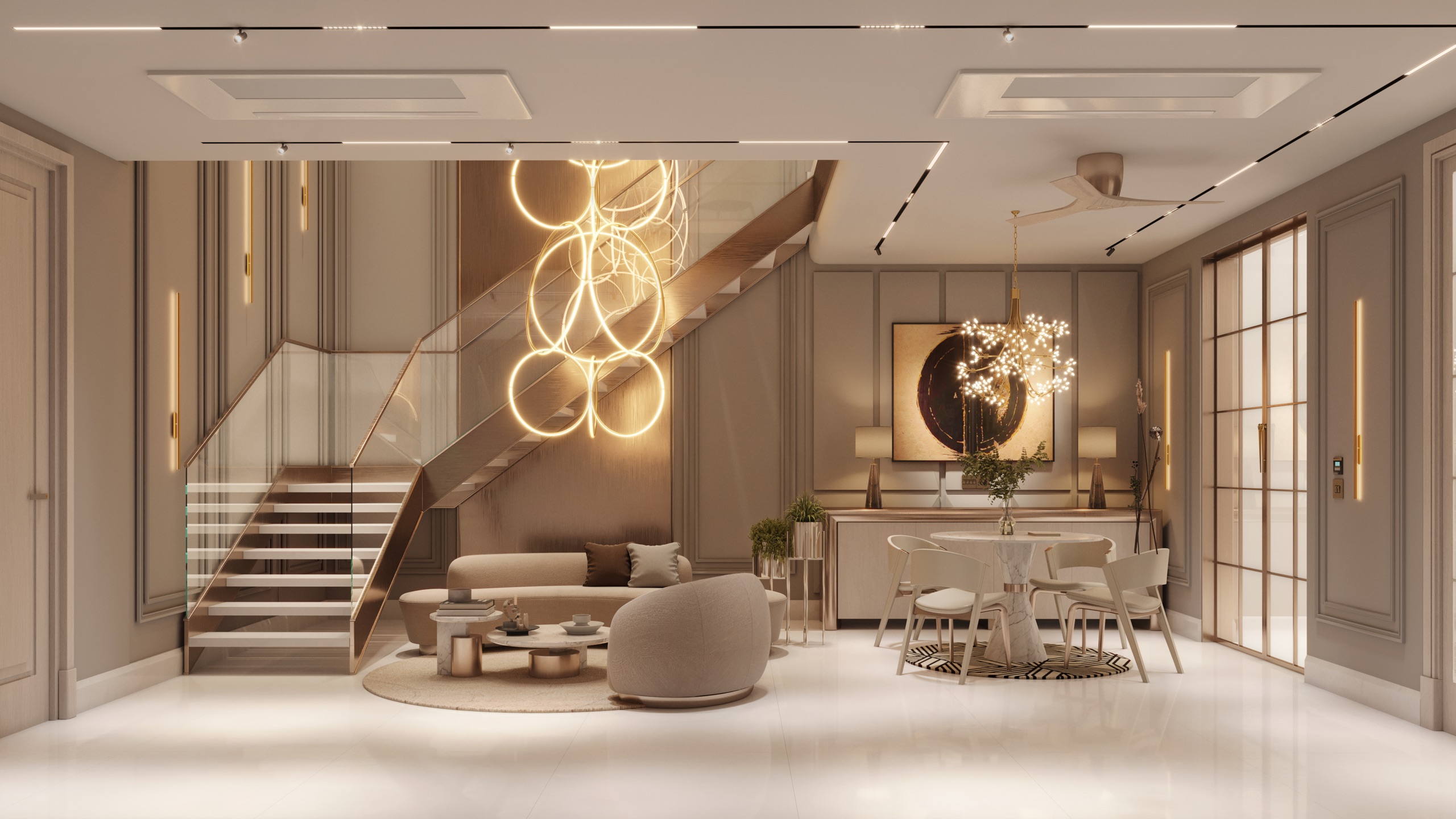
01Designing a luxury home in Delhi means responding to a city of vivid contrasts. Life is energetic, social and outward-facing, yet the home is expected to offer privacy, calm and relief. Families value generous hospitality while increasingly seeking intimate spaces for restoration, focused work and individual routines. There may be several generations under one roof, each with a different rhythm but a shared sense of belonging. The best homes hold these needs together without feeling divided. They feel gracious during a celebration, comfortable on an ordinary weekday, and composed even when daily life is fully in motion.
02The first design challenge is the transition from city to home. Delhi’s roads, sound and pace can be intense, so arrival should create a gradual sense of release. A shaded court, landscaped threshold, screened foyer or deliberately framed first view can slow the experience before the main interior is revealed. This sequence also establishes privacy. Rather than opening the entire home to the entrance, layered sightlines allow selected glimpses and moments of discovery. The resident feels protected without the house becoming closed, and a guest experiences an arrival with dignity and anticipation.
03Planning must support both formal hospitality and informal family life. A drawing room may need a strong presence for larger gatherings, while the family lounge should feel softer, closer to the kitchen and easier to inhabit every day. Dining might connect to both indoor and outdoor entertaining, but remain acoustically and visually controlled when not in use. Sliding screens, pocket doors and considered thresholds allow spaces to expand and contract. The home can become generous for a celebration and return to an intimate scale afterwards, without either condition feeling like a compromise.
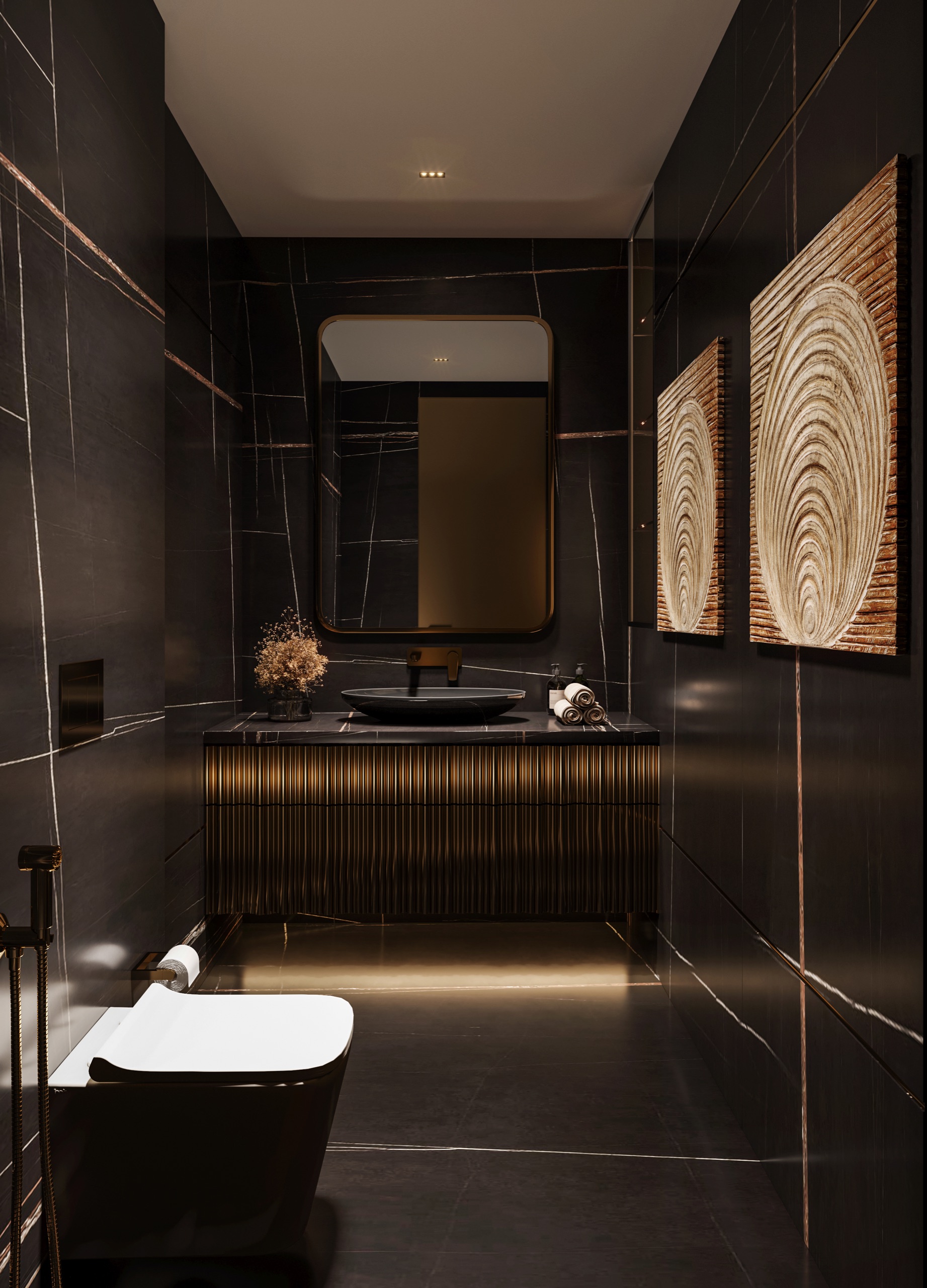
04Climate is central to every decision. Delhi’s long, bright summers call for filtered daylight, shaded edges and materials that remain comfortable under intense sun. Deep window reveals, verandas, curtains, screens and landscape can soften glare while preserving luminosity. Orientation determines where morning or afternoon light should be welcomed and where it must be controlled. In winter, the same home should open to warmth and outdoor life. Thoughtful envelopes, glazing and climate systems improve comfort, but passive decisions made at the planning stage often contribute just as much to the experience.
05Materiality can mediate between the city’s energy and the interior’s calm. Stone cools and anchors a room, but timber, textile and warm metal prevent restraint from becoming austere. Dust, maintenance and heavy use are practical realities, so finishes must age well and be serviceable. Luxury should never create anxiety about living. A beautifully detailed floor that accepts movement, a textured wall that gains character, and upholstery selected for genuine comfort are more valuable than fragile surfaces chosen only for display. Durability and refinement can—and should—belong together.
06The contemporary Delhi home must also integrate technology without appearing controlled by it. Lighting, climate, security, audio and window systems should be intuitive and visually quiet. Service areas need the same planning rigour as public rooms, because efficient kitchens, storage, laundry and staff circulation protect the ease of the entire house. When these systems are addressed early, grilles, switches, equipment and access panels can be coordinated with architecture rather than added as interruptions. True refinement is often found in everything that has been resolved but does not demand attention.
07Modern luxury is personal rather than performative. It may be a breakfast corner positioned for soft morning light, a puja space treated with intimacy, a wardrobe planned around real habits, or a bedroom acoustically separated from the sociable heart of the house. It includes places for art, inherited furniture and objects collected over time. Instead of imposing a universal image of grandeur, the design should reveal the specific character of its residents. Scale and fine materials matter, but they become meaningful only when they improve daily experience and express a life that is genuinely lived.
08For SJA, a Delhi home succeeds when it feels connected to its context yet protected from its intensity. It should acknowledge the city’s climate, culture and instinct for hospitality while offering a contemporary sense of clarity. It must welcome many people and still belong unmistakably to its residents. Luxury is not simply area, ornament or expense; it is the confidence of a home that understands how its occupants move, gather, rest and grow. When those patterns guide every layer—from architecture to a final junction—the result feels effortless, enduring and entirely at home in Delhi.
09Delhi is also a city in which homes carry memory. Families may arrive with heirloom furniture, devotional objects, photographs and pieces collected through travel. A contemporary interior should not erase this history in pursuit of a perfectly controlled image. It should create a confident setting in which old and new can coexist. A traditional object may gain greater presence against a restrained wall; a familiar dining ritual may be supported by an entirely modern plan. This balance keeps the home culturally grounded without becoming nostalgic. It allows architecture to respond to the future while respecting the stories that residents bring with them—an essential quality in a city where domestic life is continually evolving across generations.